
 Get the app
ComeSample

People & Places
No one could see anyone else or move about for three days. Yet all the Israelites had light in the places where they lived. — Exodus 10:23
One day, when my son was just 3, I was driving him to preschool when he saw a street sweeper cleaning the streets and insisted that we stop and thank him. I pulled over and my son thanked the man, putting a big smile on both of their faces. As for me, my heart swelled with pride. I was so proud of my son for acknowledging someone who most people pass right by. That day, his actions reminded me how important it is to see the people around us and to honor each person that we encounter.
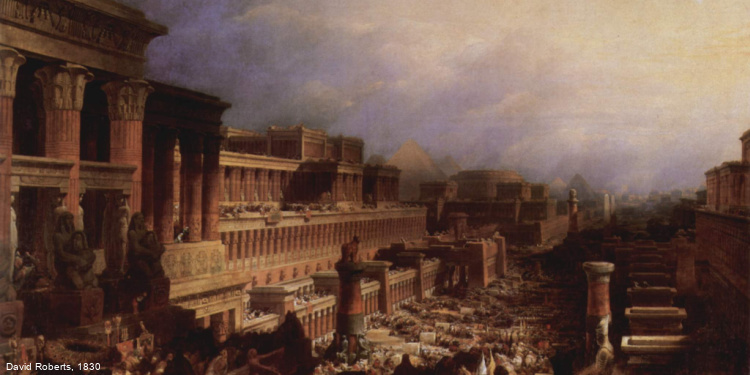
In this week’s Torah portion, we read about the plague of darkness. The Bible relates that the darkness was tangible and so dense that the Egyptians could not move. The Jewish sages explained that the darkness was “as thick as a golden dinar,” a golden coin. However, when the sages compared the darkness to a coin, they weren’t only describing the physical aspect of the plague. They were also teaching us a spiritual lesson about how we relate to the people in our lives today.
If you take two coins and hold them out in front of you, you can see the coins along with everything else, including the people around you. But if you hold the coins right in front of each eye, you see nothing at all.
The dinar is a symbol of material pursuit—the human desire for wealth and achievement—that can potentially blind us to the people around us. It can prevent us from seeing the people around us and failing to note the pain of others and the value of each person. The sages taught that this is the worst kind of darkness in the world.
Sometimes, in our pursuit of material goals, we lose sight of the people around us. In our quest for wealth, we might become blinded to the poverty of others. In our striving for a promotion at work, we may not see the loneliness of our spouse or children at home.
Coins and dollar bills can cause the worst kind of darkness. Yet, they can also be a source of light. When we choose to use our resources to help others, we banish darkness and make the world a brighter place for us all.
Scripture
About this Plan
For millennia, God’s people have been carrying out a weekly Bible study plan. Every year, they read through the Torah from Genesis to Deuteronomy. In synagogue each week, they read and study a Bible passage—the weekly parshah. This week’s parshah is called “Bo,” which is Hebrew for “come,” and covers Exodus 10:1–13:16.
More
We would like to thank International Fellowship of Christians and Jews for providing this plan. For more information, please visit: https://ifcj.org


